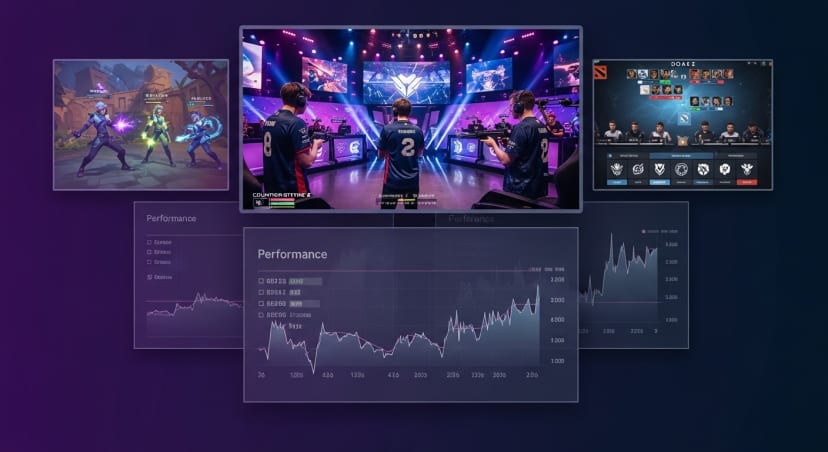
The Competitive Advantage of Timing in Esports Betting

Recommended casinos
Skill remains central to esports competition, but in betting markets, it is no longer the dominant variable. As competitive esports ecosystems evolve rapidly, the timing of a bet increasingly determines its value and risk exposure—often more than raw player skill or team reputation.
Odds often reflect outdated assumptions, slow-moving adjustments, or incomplete context tied to esports betting data, roster stability, or meta changes. In this environment, identifying when to engage with a market can be more impactful than evaluating which team appears stronger on paper based solely on historical performance metrics.
Key Takeaways
- Market timing plays a growing role in esports betting outcomes
- Odds frequently lag behind roster changes, meta shifts, and tournament formats
- Early lines and late lines carry different risk profiles
- Information timing often outweighs mechanical skill assessment
- Timing errors can negate otherwise accurate match predictions
Timing Gaps in Esports Betting Markets
Esports betting markets are highly reactive but not always fast. Odds are shaped by available data, yet esports conditions change quickly due to game patches, balance updates, and strategic adaptations. Patches, roster updates, and strategic shifts often occur between market openings and match start times, particularly in CS, VALORANT, and Dota 2 competitions.
This creates timing gaps in which odds fail to reflect the current competitive state. Bettors entering these windows may find value or exposure, depending on when they enter the market and how well they interpret real-time esports information.
Early Markets and Information Asymmetry
Early odds are often released before full information is available. At this stage, markets rely heavily on historical performance, team brand value, and prior results rather than current readiness or lineup confirmation.
While early lines can offer value, they also entail greater uncertainty. Roster announcements, role changes, or last-minute substitutions frequently surface after markets open, altering the competitive landscape without immediate odds correction—especially in tier-one esports tournaments.
Late Markets and Compressed Adjustments
As match time approaches, markets absorb new information rapidly. Odds may shift sharply in response to confirmed rosters, draft tendencies, map pools, or recent scrim results.
Late markets are typically more efficient but also less forgiving. Value windows narrow, and overreactions can occur, particularly in high-profile matches or playoff-stage esports events. Timing here becomes about avoiding mispriced momentum rather than chasing it.
Timing vs Skill Evaluation
Skill evaluation remains essential, but its effectiveness depends on timing. Assessing player mechanics or team strength without considering when that assessment is applied limits its usefulness within esports betting strategy.
A correct read applied too early may miss critical updates. A correct read applied too late may already be priced into the odds. In esports betting, timing determines whether insight translates into actionable value or unnecessary exposure.
Timing Sensitivity Across Esports Titles
Different esports titles respond to timing in different ways, depending on game design, patch frequency, and competitive structure.
| Title Type | Timing Sensitivity |
|---|---|
| Patch-heavy MOBAs (Dota 2, LoL) | High |
| Tactical FPS (CS, VALORANT) | Moderate to high |
| Stable-format titles | Moderate |
Games with frequent balance changes and draft phases amplify the importance of market timing and information flow.
Closing Perspective
Esports betting is no longer a pure test of predictive accuracy. It is increasingly a test of situational awareness and timing discipline within fast-moving betting markets.
As markets grow faster and more reactive, skill evaluation remains necessary—but timing determines whether that evaluation creates advantage or exposure. In modern esports betting, knowing when to act is often the difference between a sound prediction and a costly one.